

Flipping localisation: centring local agency in Solomon Islands
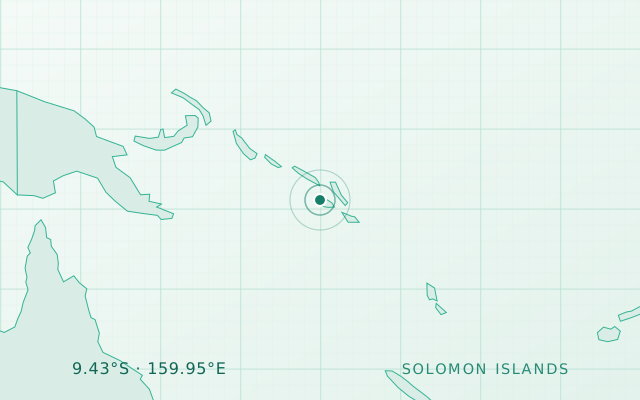
Doctoral research by associate Dr Sally Angelson, reframing localisation around local agency in Solomon Islands. It produced the Local Equity Nexus, a tool for examining power, partnerships and practice.
The challenge
Development partners face growing expectations to localise, often without a shared definition of what meaningful change involves. Efforts usually begin inside external organisations, whose interpretations shape the agenda, priorities and measures of success. Four years of Pacific tracking by PIANGO and the Humanitarian Advisory Group found progress in partnership and coordination, but little evidence that power had shifted to local actors. That raises a practical question for Pacific partners: how can localisation shift power when external organisations still define what change should look like?
What we did
- Reversed the usual starting point: rather than asking how international organisations transfer power, the research asked how Solomon Islanders already exercise agency, and what helps them shape development and peacebuilding on their own terms.
- Designed and led a qualitative study grounded in tok stori, the Melanesian practice of shared, open conversation, with 23 dialogues during October 2024 fieldwork spanning national, provincial and local government, churches, NGOs, youth, academia, business and development partners.
- Worked with Solomon Islands research assistant Raywin Aluta, who contributed local knowledge, guided cultural protocol and helped interpret findings.
- Connected participants' accounts to wider institutional and funding arrangements through systematic qualitative analysis, with reflexive attention to Sally's position as a Pākehā New Zealander.
How we worked
Listening came first. Grounded in tok stori and more than twenty years of practitioner experience, the design created space for participants to shape the conversations, question assumptions and name priorities beyond established localisation agendas. This case study profiles Sally's independent doctoral research, rather than an assignment delivered for a Future Partners client.
Outputs
Outcomes
Nearby in the atlas
Related case studies

Evaluation of Kōtui, Oxfam Aotearoa’s Negotiated Partnership Programme
Oxfam Aotearoa · MFAT
 Review 07°05′N 171°23′E
Steering two Pacific fisheries projects through the halfway mark
Marshall Islands Marine Resources Authority (MIMRA) · Tuvalu Fisheries Authority (TFA) · World Bank
 Review Pacific · regional
A formative review of Pacific climate finance capacity
New Zealand Ministry of Foreign Affairs and Trade (MFAT)