

Pacific Regional Fisheries Training Programme
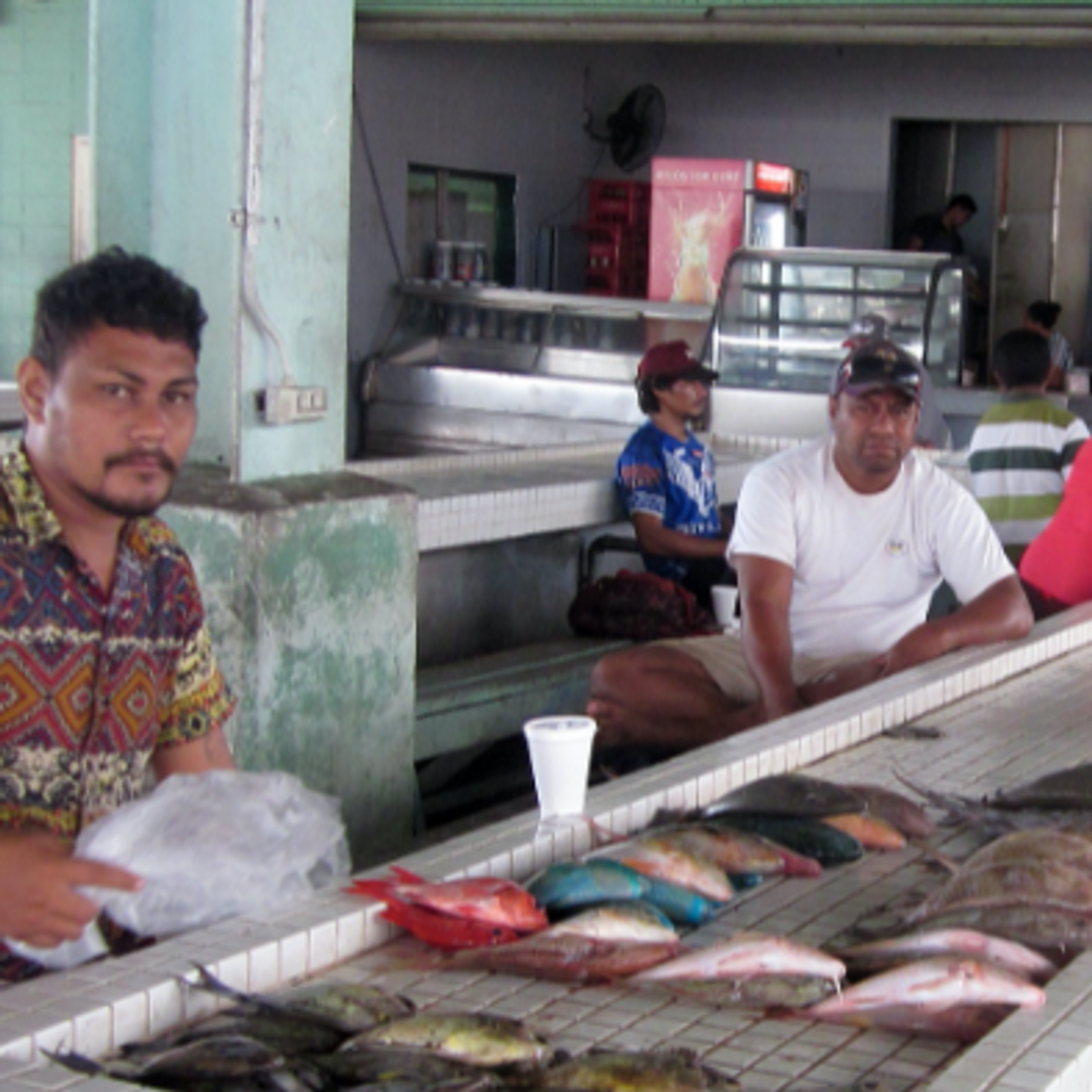
Evaluating fisheries training delivered to more than 700 participants across 14 Pacific countries to inform a second phase.
The challenge
The $7.4m Pacific Fisheries Training Programme (PFTP) commenced in March 2013 with the goal of increasing Pacific Islands’ sustainable economic development through a greater contribution from the seafood sector. To achieve this goal, the programme has trained over 700 Pacific Island men and women across 14 countries: Cook Islands, Fiji, Kiribati, Nauru, Niue, Papua New Guinea, Solomon Islands, Samoa, Tonga, Tokelau, Tuvalu, Vanuatu, Marshall Islands and Federated States of Micronesia. MFAT engaged Dr Fiona Kotvojs to conduct this evaluation.
What we did
- Fiona led a three-person team to implement the end-of-programme evaluation. This end-of-programme evaluation was designed to assess effectiveness and relevance of the implemented programme, which would inform the decision as to whether to proceed to a second phase of PFTP, and if so the future focus and design with particular emphasis on efficiency.
- The evaluation was challenging because the training was implemented across 14 countries; to participants from community, public and private sectors; by a range of training providers (including SPC, FFA and NMIT); and used different modalities (training was delivered in-country, regionally and in New Zealand). Robust baseline data was not available and there was limited post-test data.
How we worked
Fiona worked with stakeholders to design the evaluation and then led the three-person team to evaluate this training programme. The evaluation adopted a case study approach; completed a programme logic analysis and cost utility analysis and applied qualitative and quantitative methods. Cases were defined by stakeholder group: (a) private industry, (b) public sector and (c) community. Data was sourced from 110 documents and 125 semi-structured interviews with stakeholders in the Pacific. The findings showed that while learning and application of learning were high, PFTP funded training made limited contribution to low level outcomes and little contribution to medium term outcomes. The reasons for this were identified.
Outcomes
Nearby in the atlas
Related case studies
 Review 07°05′N 171°23′E
 Steering two Pacific fisheries projects through the halfway mark
Marshall Islands Marine Resources Authority (MIMRA) · Tuvalu Fisheries Authority (TFA) · World Bank
Evaluation of Save the Children New Zealand’s Negotiated Partnership Programme
Save the Children New Zealand · MFAT
Strengthening Broadcasting in the Pacific Islands: A Pathway to Development
MFAT · Pacific Cooperation Broadcasting Ltd